Shawn Wright: Daniel Ortega and Rosario Murillo Institutionalize the Religious Crackdown in Nicaragua
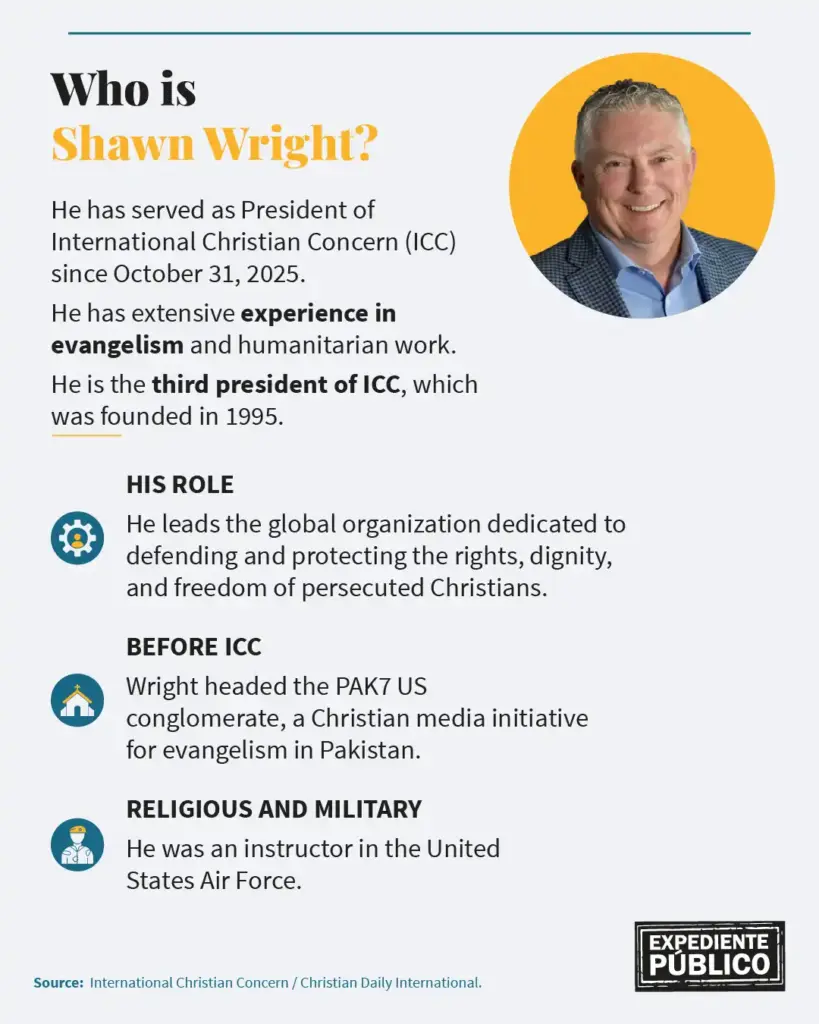
Shawn Wright is president of International Christian Concern (ICC), which published the 2026 Global Persecution Index. According to the ICC report, the regimes in Nicaragua and Cuba are responsible for the highest levels of religious repression in Latin America. Wright calls on the United States, the European Union, and democratic governments to take action to…
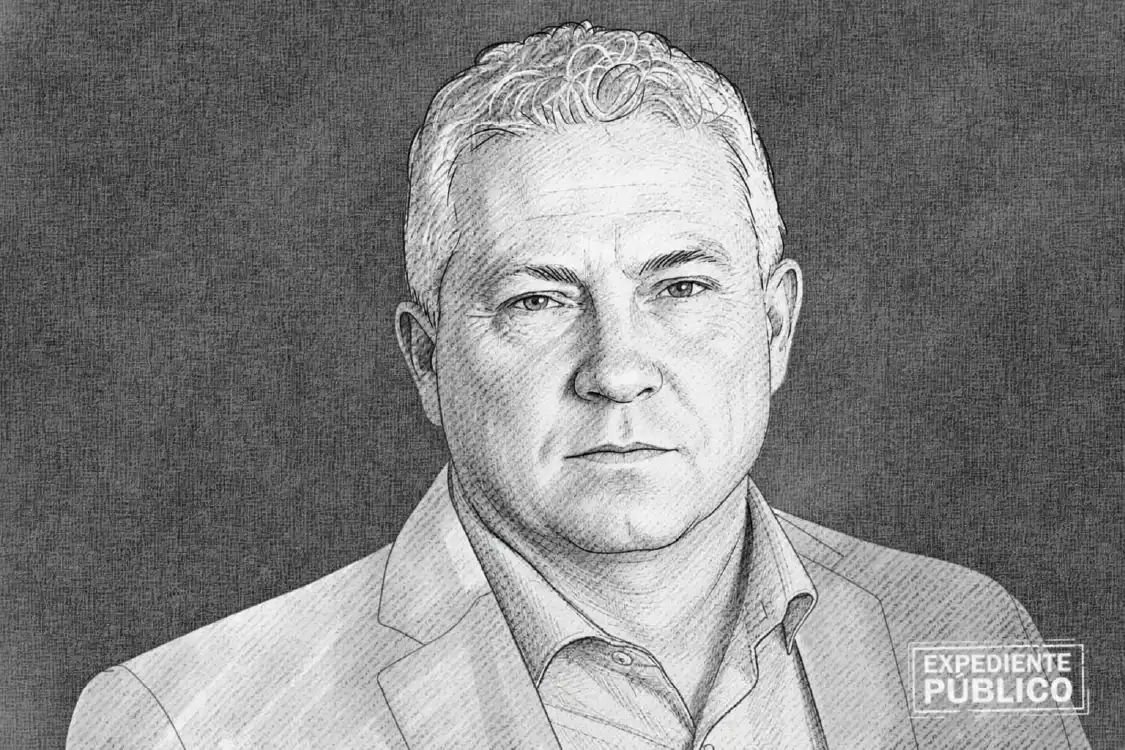
Shawn Wright is president of International Christian Concern (ICC), which published the 2026 Global Persecution Index.
According to the ICC report, the regimes in Nicaragua and Cuba are responsible for the highest levels of religious repression in Latin America.
Wright calls on the United States, the European Union, and democratic governments to take action to stop the religious crackdown in Nicaragua.
Expediente Público / Tomás Guevara / Washington
The crackdown on Catholic clergy, evangelical pastors, and worshippers who oppose the dictatorship of Daniel Ortega and Rosario Murillo shows a regime at war with one of the pillars of civil liberty.
Shawn Wright, president of International Christian Concern (ICC), fights for religious freedom around the world, and spoke with Expediente Público in Washington about the crackdown on faith communities in Nicaragua.
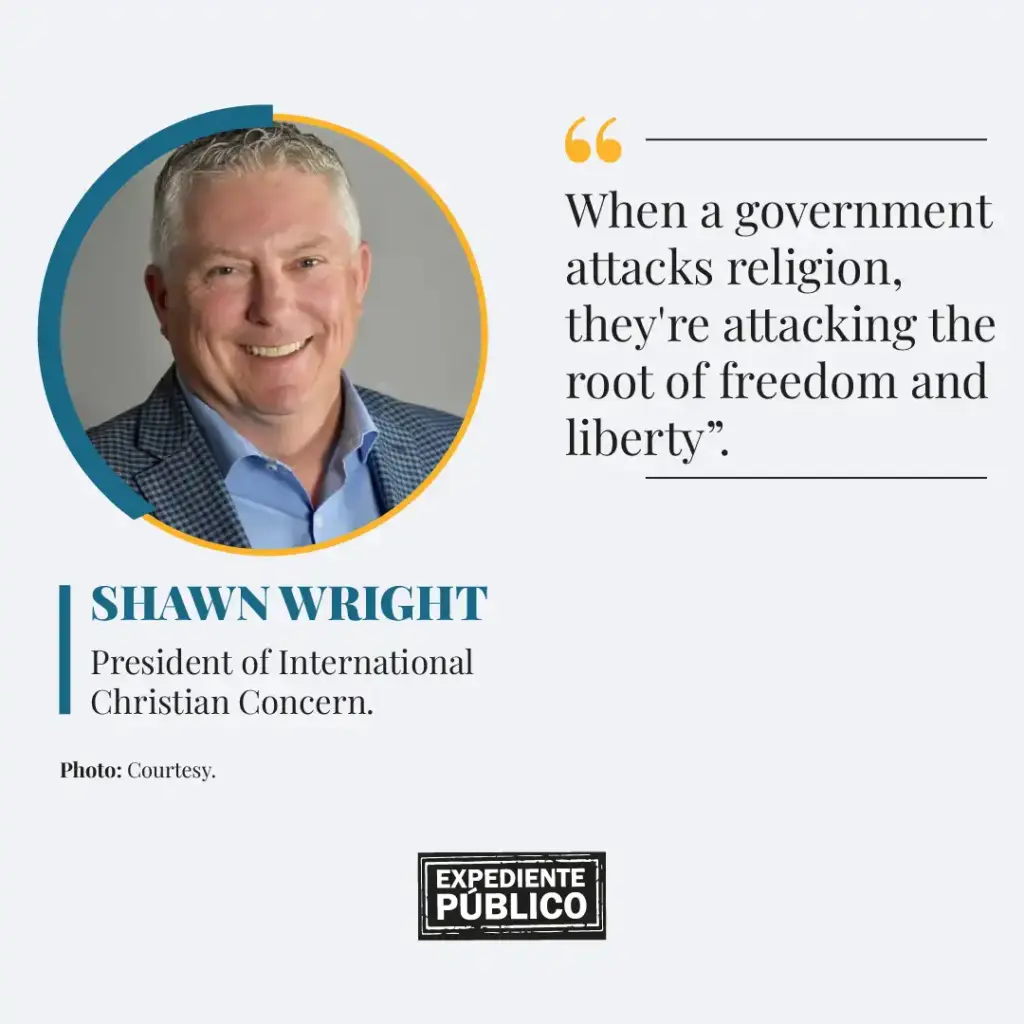
“We must speak out because it is difficult to have political and civil freedom without religious freedom. (…) Religious freedom is the foundation of liberty, and when a government attacks religion, it is attacking the very root of freedom,” said the leader of this international ecumenical fellowship.
Subscribe to the Expediente Público newsletter and receive more information
Daniel Ortega and Rosario Murillo lead the Crackdown
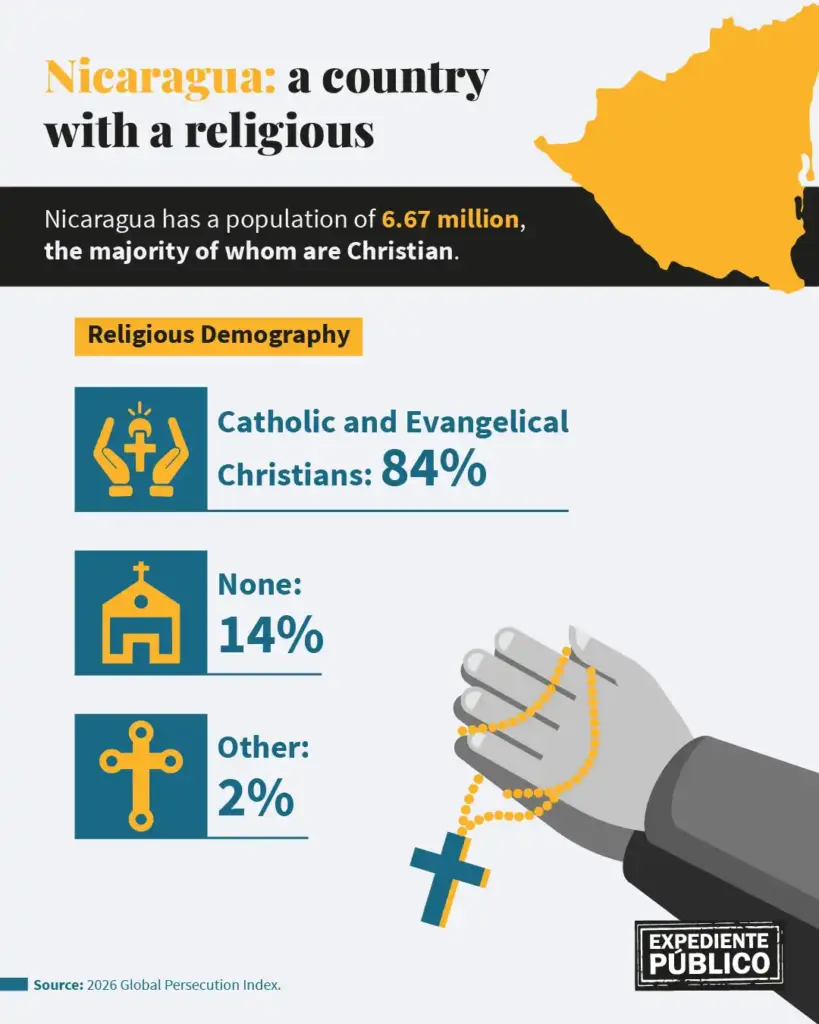
The ICC singled out Nicaragua as the epicenter of repression in Latin America in its most recent report, the 2026 Global Persecution Index.
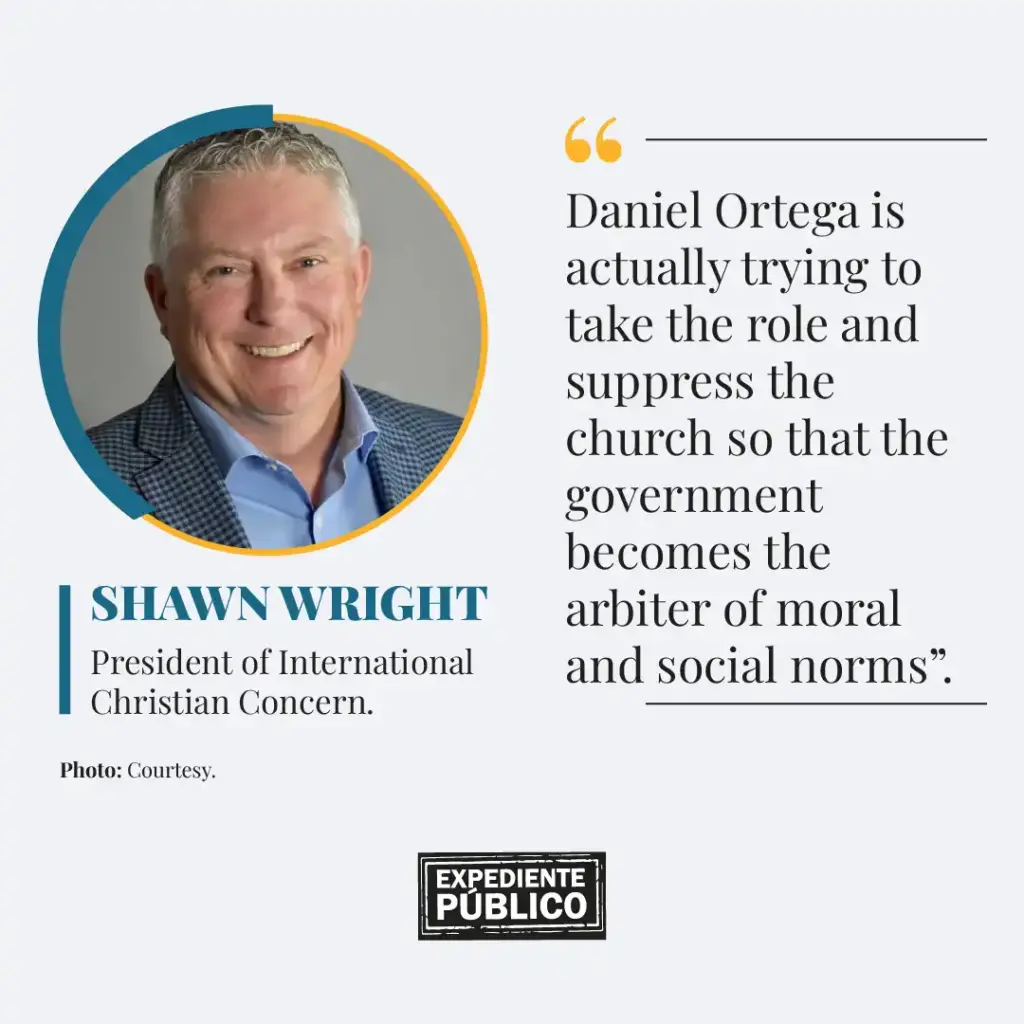
For Wright, Nicaragua highlights the Sandinista regime’s attempt to “replace the church and eliminate its influence,” and above all to make itself the “absolute arbiter of the country’s moral and social norms.”
The Vatican has recognized more than 261 religious workers whom the regime expelled from the country between 2018 and 2025, drawing on reports by the human rights group Nicaragua Nunca Más. The list includes bishops, priests, deacons and seminarians. The regime jailed many of them and then forced them into exile, leaving them stateless.
Wright argues that Daniel Ortega and Rosario Murillo play a central role in the repression because of the dictatorship’s top-down structure.
“There is evidence that they maintain a pattern of actions aimed specifically at religious institutions and leaders they consider independent or critical of the government. At times Ortega himself and his wife order these measures,” Wright said.
Bishop Juan Abelardo Mata, Disappeared
Police are holding the 80-year-old bishop emeritus of Estelí, Juan Abelardo Mata, under houes arrest at his home. Officers first detained him on June 29. The day before, he had celebrated Mass at Santa Cruz del Calvario Church, where he delivered a message of solidarity to those the Sandinista regime has jailed and persecuted.
The Interior Ministry confirmed the arrest, and said it had returned him to his home in Tisma, Masaya, near Managua, on July 4. Neither his family nor his parishioners, however, have been able to reach him.
Read: The Ortega-Murillo dictatorship marked its anniversary cut off from the world
On July 22, the United Nations High Commissioner for Human Rights, Volker Türk, demanded that the Sandinista regime provide proof of life. He also condemned the abuses against religious figures and called for the immediate release of those the regime holds under this arbitrary practice.
The persecution of all dissent in Nicaragua has also reached evangelical pastors and other leaders, though the records show that the repression has concentrated on members of the Catholic Church.
The evangelical movement has grown steadily in the country since the 1990s. Pollsters such as M&R Consultores estimate that Christians of various denominations now outnumber practicing Catholics: they account for 39.7% of the population, against 30.9% for Catholics.
The severe erosion of religious freedom in Nicaragua, Wright says, recalls other authoritarian regimes of the 20th century, such as the former Soviet Union, where the Kremlin crushed the Orthodox Church and reduced it to a marginal presence in Russian society and in its satellite states.
Statements Are Not Enough
This authoritarian turn shows that the Ortega-Murillo dictatorship is following those old authoritarian playbooks, Wright says, and he urges governments to step up international pressure.
“Nicaragua’s story is not only about one country; it is a warning about what happens when governments begin to treat independent religious communities as political threats instead of recognizing them as institutions that contribute to the common good,” he said.
Organizations such as the ICC see Nicaragua as a case that is both instructive and urgent, and a reason to change how the world approaches religious persecution.
Of interest: Why sanctions are not stopping U.S. franchises from opening in Nicaragua
The report of the U.S. Commission on International Religious Freedom (USCIRF), published last year, ranked Nicaragua as the most dangerous country in the Western Hemisphere for religious leaders and their congregations, and raised it to the category of “Country of Particular Concern.”
According to the ICC report, religious persecution is routine in ten countries. The list includes Cuba and powers allied with the Sandinista regime, among them Russia, China, Iran and North Korea.
In a resolution it adopted on June 18, the European Union demanded that the Ortega-Murillo regime end its crackdown on Catholic clergy and Christians of other denominations.
The European body lists arbitrary detentions — Bishop Mata’s among them — forced disappearances, rigged trials, the exile of dissidents, revocation of citizenship, confiscation of property and crimes against humanity.
They Expect Concrete Action
Members of the European Parliament have asked the top authorities of the European Union, the Council and the Commission to “suspend the application of the EU-Central America Association Agreement with respect to Nicaragua for as long as the repression continues,” according to the European Parliament.
This legislature renewed its condemnation of the Nicaraguan regime after Indigenous leader Brooklyn Rivera Bryan died at the hands of the State.
Special report: Nicaragua, Iran’s gateway to Latin America
For Wright, unless the international community escalates its measures, the suffering inside the persecuted communities will only deepen while the perpetrators go unpunished.
“A country can be put on the list (of Countries of Particular Concern) and nothing happens. But governments can look at that designation and start revoking visas, freezing assets held outside the country and taking other similar steps,” the ICC president said.
He added that civil society organizations have to continue documenting violations and holding those who commit them accountable, so that justice can eventually be served.
For figures like Ortega, Wright advises, governments can go after their assets and restrict their ability to travel outside the country.
“When you restrict the international movement of those responsible and cut them off from the international community, real pressure begins to build; those are some of the steps governments can take,” he said.
Matters of Priority
The ICC believes religious freedom and the persecution of faith communities should move into public debate, and that the multilateral bodies where the countries in question hold seats should place these issues at the center of their agendas.
Wright added that the Christian communities supporting this research face hard work ahead: they must make the information public and circulate it so that it reaches inside the churches themselves and prompts responses and support for the members of the persecuted church.
“One of the things I value most about the ICC is that we try to spread these stories. We consider it essential that the persecuted Church tell its own story; that conviction must be at the center of our work. We must give victims the chance to tell their own experiences and amplify their voice,” he said.
Watch: Nicaragua: Russia’s strategic enclave in the heart of the Americas
The challenge, he adds, is to keep working on the Global Persecution Index so that people know it and so that it does not vanish within days, as so many other subjects do with the flood of information.
“We cannot make an occasional comment and then drop the subject. We must make sure that we Christians stay united and take practical steps; that way we can document what is happening and help persecuted people not only survive but overcome those circumstances,” he stressed.
The Greatest Risk: Normalizing Repression
For Wright, the greatest risk inside Nicaragua is that the systematic level of repression reaches a point of normalization across every social stratum and extinguishes all resistance.
“When restrictions become routine, people can begin to see the loss of freedom as inevitable, and eventually they stop resisting,” he said.
Becoming irrelevant under the boot of a dictatorial regime carries costs down the road, Wright added, as communist and far-right dictatorships that survived mostly into the 1990s have shown.
“What one generation tolerates becomes the norm for the next. If we Christians tolerate this repression, the next generation will live under it as though it were normal — and it is not normal,” he warned.
Also: Daniel Ortega’s dictatorial speech revives international condemnation
Despite the bleak picture in Nicaragua, Wright believes the dictatorship has not won the battle, because Nicaraguans’ resistance persists inside and outside the country.
“Despite the extraordinary pressure they face, many Christians in Nicaragua keep practicing their faith and gathering; it is also a story of courage because, despite that extraordinary pressure, they keep praying and remain believers,” he said.
And he repeated that a government can seize powers to repress its people, but it can never reach into the corners of conscience to erase the longing for freedom that drives the oppressed — a longing no repression can wipe out.
This article was translated into English with the assistance of artificial intelligence and was reviewed and edited by a human editor.