U.S. Pressure Fractures the Venezuela–Iran Axis
* Interim ruler Delcy Rodríguez has weakened the link with Tehran after receiving CIA Director John Ratcliffe in January. * This shift has derailed the foreign policy established under Hugo Chávez and built upon 295 bilateral agreements. * Despite the rupture, analysts agree that a complete and immediate break in relations between the two nations…
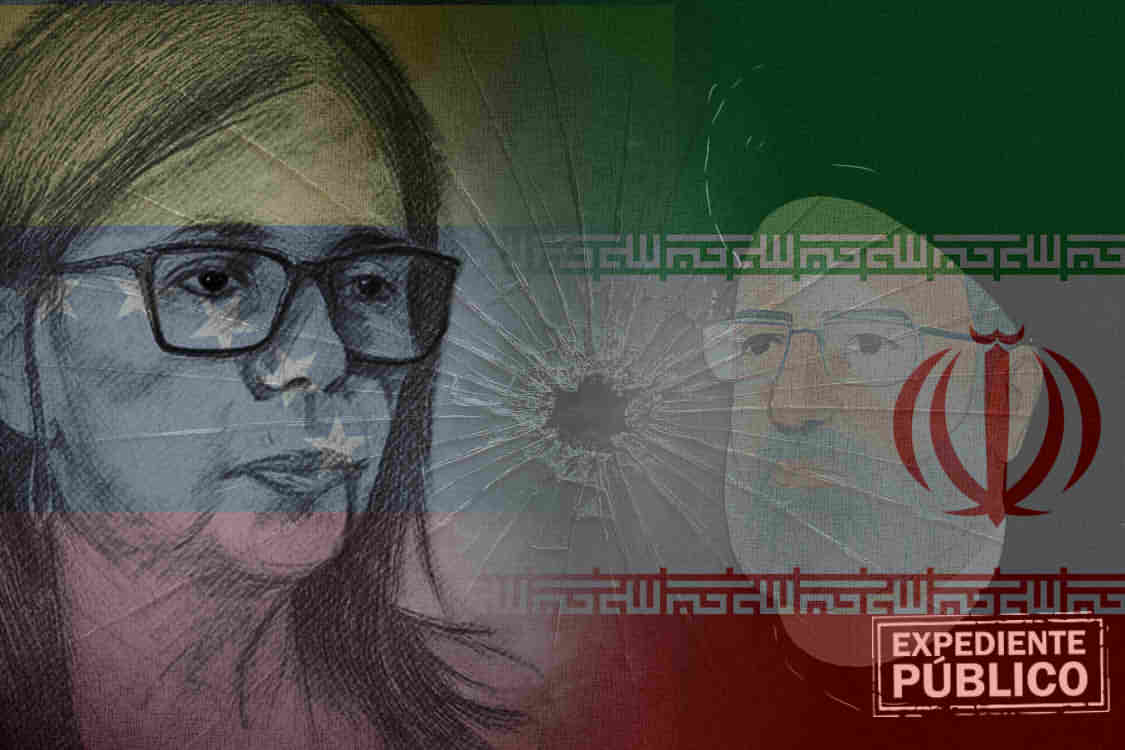
* Interim ruler Delcy Rodríguez has weakened the link with Tehran after receiving CIA Director John Ratcliffe in January.
* This shift has derailed the foreign policy established under Hugo Chávez and built upon 295 bilateral agreements.
* Despite the rupture, analysts agree that a complete and immediate break in relations between the two nations remains unlikely.
Expediente Público / Caracas
In one of the aisles of the Megasis supermarket in Caracas, a warning sign has been posted: “The use of photographic cameras in this establishment is prohibited.” With this measure, customers are unable to document the shortage of goods at the well-known Iranian retail chain.
Since January, when Nicolás Maduro and his wife, Cilia Flores, were removed from Venezuela in a U.S. military operation, imports from Iran that once stocked Megasis shelves have ceased. An employee told Expediente Público that the store is currently operating solely on inventory accumulated through the end of 2025.
As a result, the supermarket has been forced to reduce the number of shelves and aisles, as well as the variety of products it offers. Even so, it can no longer keep them fully stocked.
Subscribe to the Expediente Público Newsletter and Receive More Information
This branch—the only Megasis location in Venezuela—opened in June 2020, when the country was paralyzed by the COVID-19 pandemic. It occupies a 20,000-square-meter warehouse on the eastern edge of Caracas.
The supermarket became a showcase for the industrial capabilities of the Islamic Republic, perhaps the most visible one for ordinary Venezuelans. From the moment it opened, it offered everything from agricultural and construction tractors to a wide range of household and industrial cleaning products, food, and spices at prices unmatched in the local market.
For example, an 800-gram can of tomato paste sold for $2.20—less than half the price of a locally produced equivalent.
In June 2023, Iranian President Ebrahim Raisi toured the store during his final visit to Caracas. An investigation by Spain’s El País newspaper revealed that the chain, which operates more than 700 stores in Iran, is managed through that country’s Ministry of Defense.
Shortly before Raisi’s arrival, the manager of the Caracas branch, Abbas Ghafari, publicly stated that the company planned to open additional locations in the Venezuelan capital. One pro-government media outlet confidently declared: “Megasis is here to stay.”
That promise never materialized.
Three years later, Megasis operates with only two cashiers. Security personnel have been dismissed, along with most of the employees responsible for moving merchandise from storage areas to store shelves.
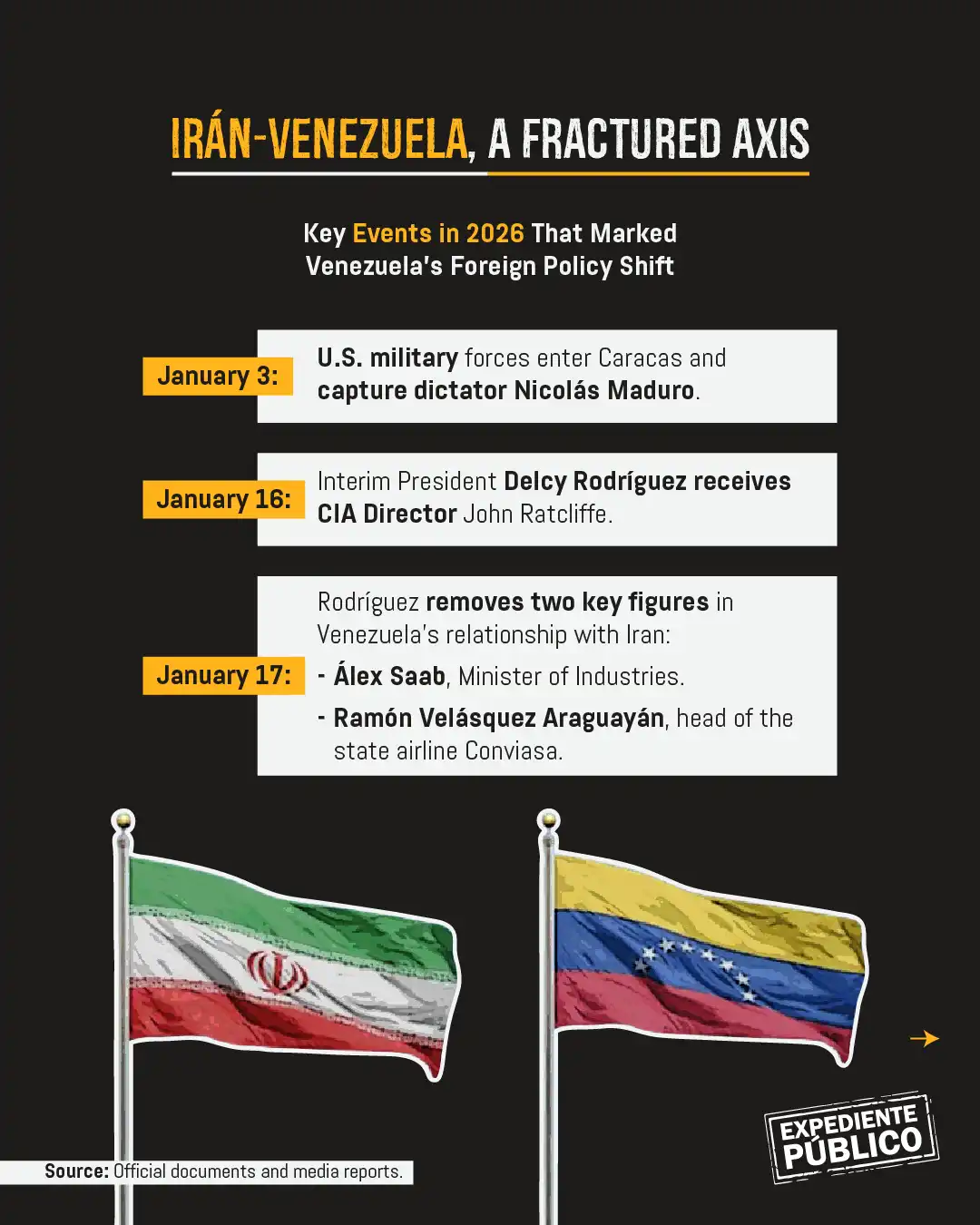
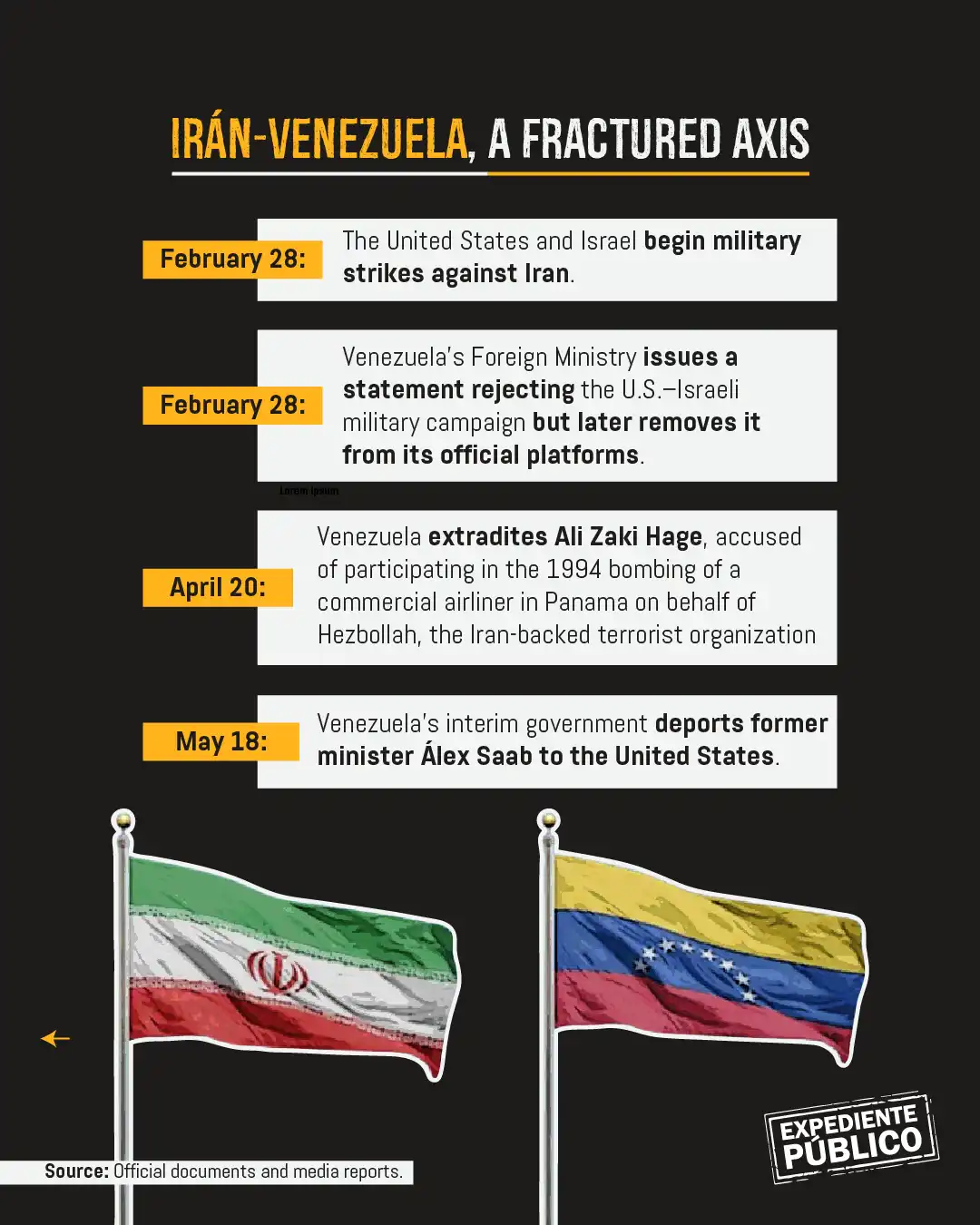
Swipe for more information
A cashier supervisor now personally verifies customers’ purchases as a measure to prevent theft.
What is happening at Megasis serves as an indicator of the current state of relations between Venezuela and Iran.
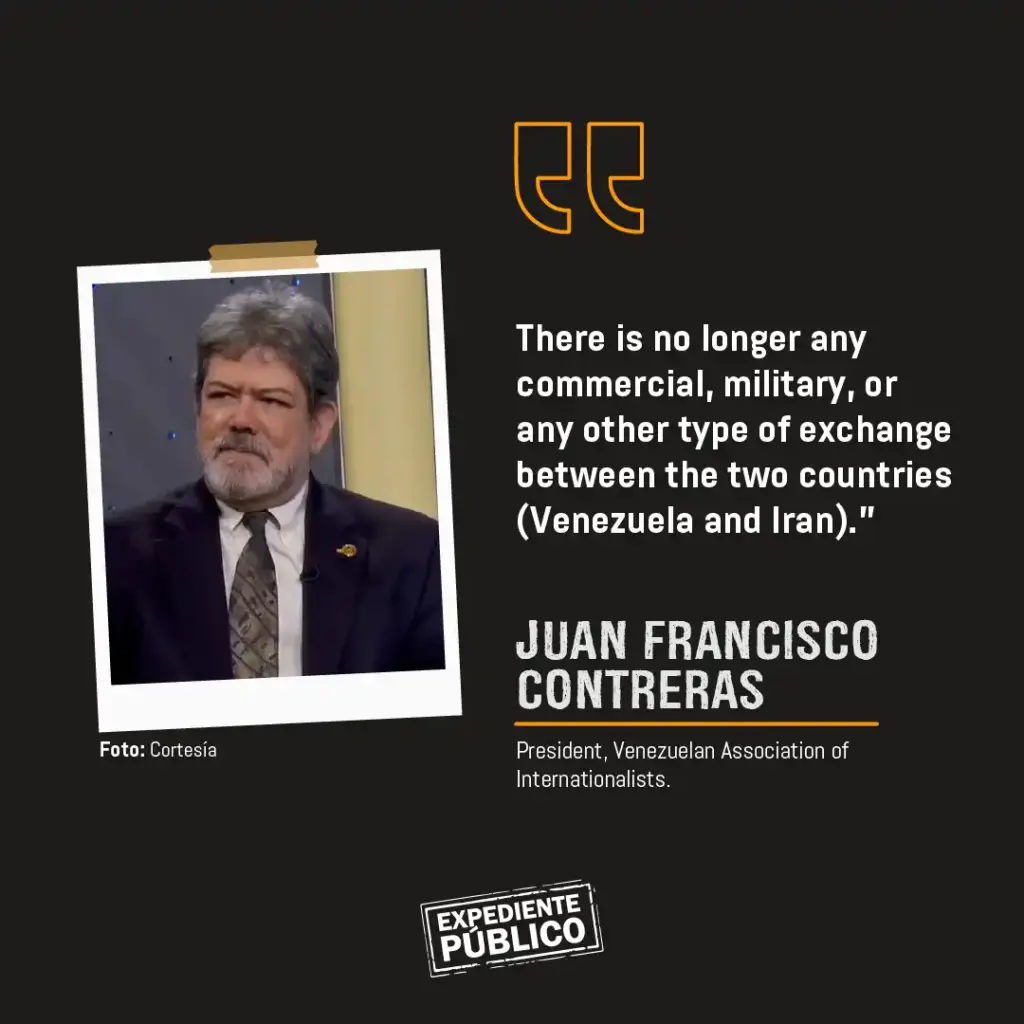
The political realities of both countries have changed dramatically this year due to U.S. influence. According to Juan Francisco Contreras, president of the Venezuelan Association of Internationalists, the relationship is now effectively “frozen.”
“There is no longer any commercial, military, or other kind of exchange between the two countries,” he told Expediente Público.
Hugo Chávez: Architect of a Militant Relationship
The relationship between the two nations began 75 years ago, when both emerged as oil-producing powers, and was strengthened through their joint participation in the Organization of the Petroleum Exporting Countries (OPEC).
The partnership took on a distinctly militant character during Hugo Chávez’s presidency. Venezuelan international affairs analyst María Teresa Romero explained to Expediente Público that this orientation created a degree of Venezuelan dependence on what Iran could provide to alleviate the humanitarian crisis that erupted in 2015, while also distancing the South American nation from the Arab world.
Under Maduro, ties with Iran continued to deepen. In June 2022, the Venezuelan dictator visited Tehran and signed a bilateral cooperation agreement with President Raisi that remains in force through 2042.
Context: Oil and Democracy—The Contradictions of U.S. Policy Toward Venezuela
In November 2024, Venezuelan Foreign Minister Yván Gil stated that the two countries had entered into 294 agreements since Chávez took office. The latest publicly known agreement was signed in December of the following year and concerned scientific cooperation in the healthcare sector.
Gil announced the figure during an event at the International Center for Productive Investment (CIIP), held to mark the signing of 70 additional agreements with Iran. The Chávez-Maduro regime routinely signed dozens of agreements with its allies during single ceremonies. At the time, the CIIP was headed by Álex Saab, the Colombian-born businessman whom Maduro had entrusted with coordinating relations between Venezuela and Iran.
Álex Saab: The Missing Link
Saab became the center of an international controversy in June 2020 when he was arrested in Cape Verde at the request of U.S. authorities while making a stopover on a charter flight from Caracas to the Iranian capital. In his briefcase, investigators found a letter identifying him as an official “envoy” from the presidential palace in Miraflores to Tehran, with broad powers and authority.
Saab was extradited to the United States and prosecuted on charges of money laundering and foreign corruption. The case was suspended before a verdict was reached in December 2023, when President Joseph Biden’s administration granted him a pardon as part of a prisoner exchange with the Maduro dictatorship. Upon returning to Venezuela, Maduro appointed him Minister of Industries and president of the International Center for Productive Investment (CIIP).
Saab’s downfall is another indicator of the changing course of relations between Venezuela and Iran.
In February, interim president Delcy Rodríguez—the same official who had signed one of the letters seized from Saab in 2020—removed him from his ministerial post and subjected him to immigration proceedings that culminated in his deportation to the United States on May 17, where he is wanted for retrial on money-laundering charges.
The decision came shortly after Rodríguez received a visit from CIA Director John Ratcliffe.
Related: Who Is Venezuela’s New Defense General?
Delcy Rodríguez and the Shift in Foreign Policy
Between Saab’s dismissal and his expulsion from the country, three key developments signaled a major shift in Venezuelan foreign policy.
When the United States and Israel launched their military campaign against Iran in late February, Venezuela’s Foreign Ministry issued a statement expressing its “rejection” of the operation. However, the text was abruptly removed from official propaganda platforms and replaced with a more moderate version.
According to Juan Francisco Contreras, the incident demonstrates that despite the interim government’s apparent alignment with Washington, there are still officials within the administration who remain committed to anti-imperialist rhetoric.
“There has been neither the time nor the interest to change that discourse, which continues to champion multipolarity, the Third World, and similar concepts. That statement came from a section of the Foreign Ministry that had not been touched after January 3. That is why it had to be changed afterward,” the international affairs expert explained.
The second development was the removal of Air Force Major General Ramón Velásquez Araguayán, who headed Conviasa, the state-owned airline that operated flights to Tehran.
Conviasa was sanctioned by the U.S. Treasury Department in 2020, and those sanctions remain in effect. During Velásquez’s tenure, the airline also created a subsidiary, Emtrasur, whose sole aircraft was a Boeing 747 acquired through a deal with Mahan Air, a company accused of being controlled by Iran’s Revolutionary Guard. The aircraft was seized during a stopover in Argentina in February 2024 and later transferred to the United States.
The third development was the extradition to Panama of Ali Zaki Hage Jalil, who was wanted in connection with the bombing of a commercial airliner in Panama in July 1994 that killed 21 people, including 12 Jewish passengers. The attack was claimed by Hezbollah, an organization backed by Iran.
The extradition of Hage Jalil, 56, was authorized in April by the Criminal Cassation Chamber of Venezuela’s Supreme Court, an institution dominated by pro-government officials. The interim administration immediately handed him over to Panamanian authorities.
Related: Atlantic Council: Mass Surveillance in Venezuela Remains Active Under Delcy Rodríguez
Interpol had located Hage Jalil a year earlier in the exclusive La Caranta area of Margarita Island, according to police records cited in the court ruling authorizing his extradition.
The revelation revived allegations that members of the terrorist organization maintain a presence in the Venezuelan tourist enclave. Hage Jalil’s arrest had been delayed despite the fact that he worked openly at a beachfront restaurant known as El Cristo.
Is a Break Between Venezuela and Iran Possible?
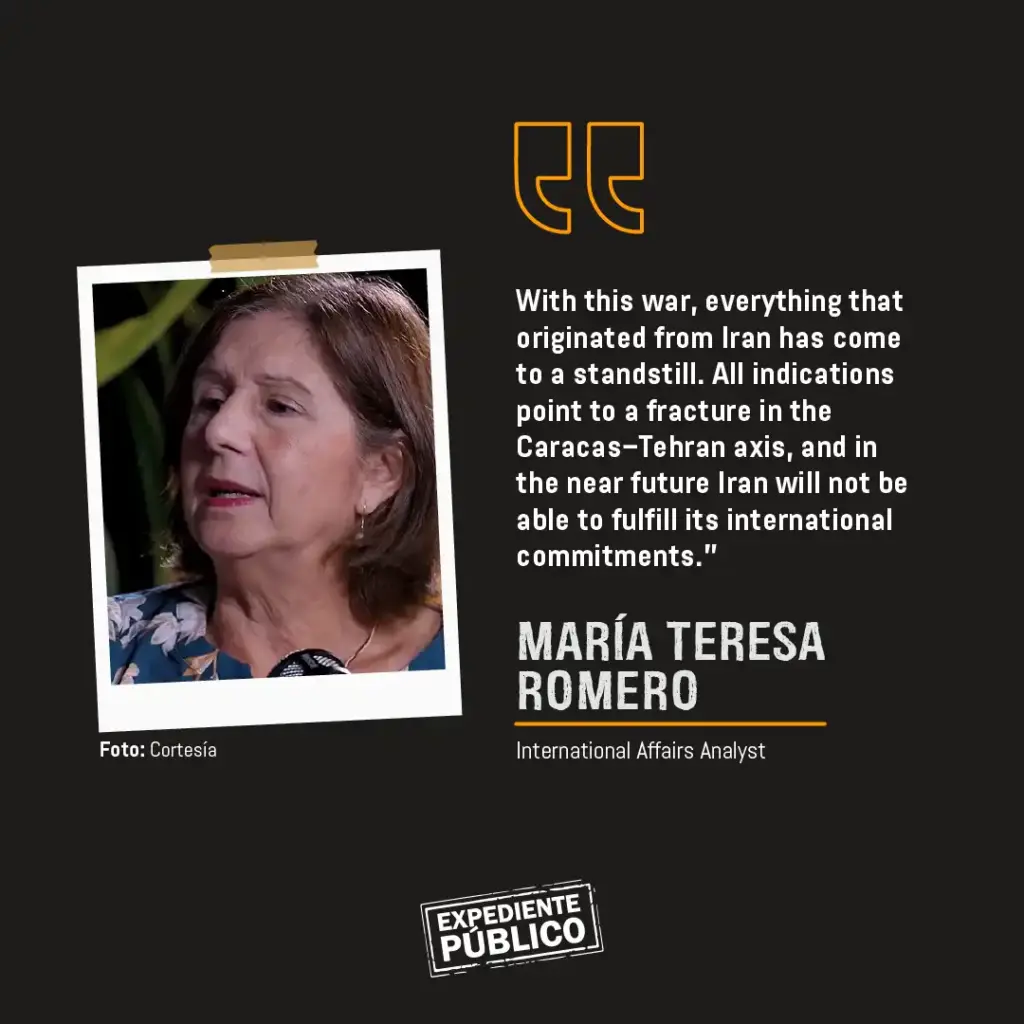
The Venezuela–Iran axis built by Hugo Chávez has been fractured, according to analyst María Teresa Romero, not only because of the influence of Donald Trump’s administration over Venezuela’s current rulers but also because of the impact of the ongoing conflict involving Iran.
“With this war, everything originating from Iran has come to a standstill. All signs point to a fracture in the Caracas–Tehran axis, and in the near future Iran will not be capable of fulfilling its international commitments. Therefore, the rupture will deepen,” Romero told Expediente Público.
Nevertheless, despite the weakening of the Venezuela–Iran partnership, a formal diplomatic rupture remains unlikely during the “Rodrigato”—the term commonly used to describe Delcy Rodríguez’s administration—according to international relations expert Elsa Cardozo.
Cardozo explained that it would be difficult for Rodríguez to completely disengage from the network of international relationships that she herself helped construct.
Rodríguez served as Maduro’s foreign minister from 2014 to 2017, during which she visited Tehran. Later, as executive vice president and head of the economic and energy portfolio, she maintained close ties with the Chávez movement’s international allies.
Cardozo noted that Rodríguez still has three major South American partners who would oppose a rupture with Iran: Claudia Sheinbaum’s Mexico, Gustavo Petro’s Colombia, and Luiz Inácio Lula da Silva’s Brazil.
“I see a willingness to take advantage of this moment and get rid of certain connections, but we do not know what debts and arrangements may exist. Moreover, among progressive governments it is not viewed favorably to abandon Iran,” she warned.
Romero agrees with this assessment. In her view, ending diplomatic relations with Iran would be one of the first decisions to be taken after a presidential election.
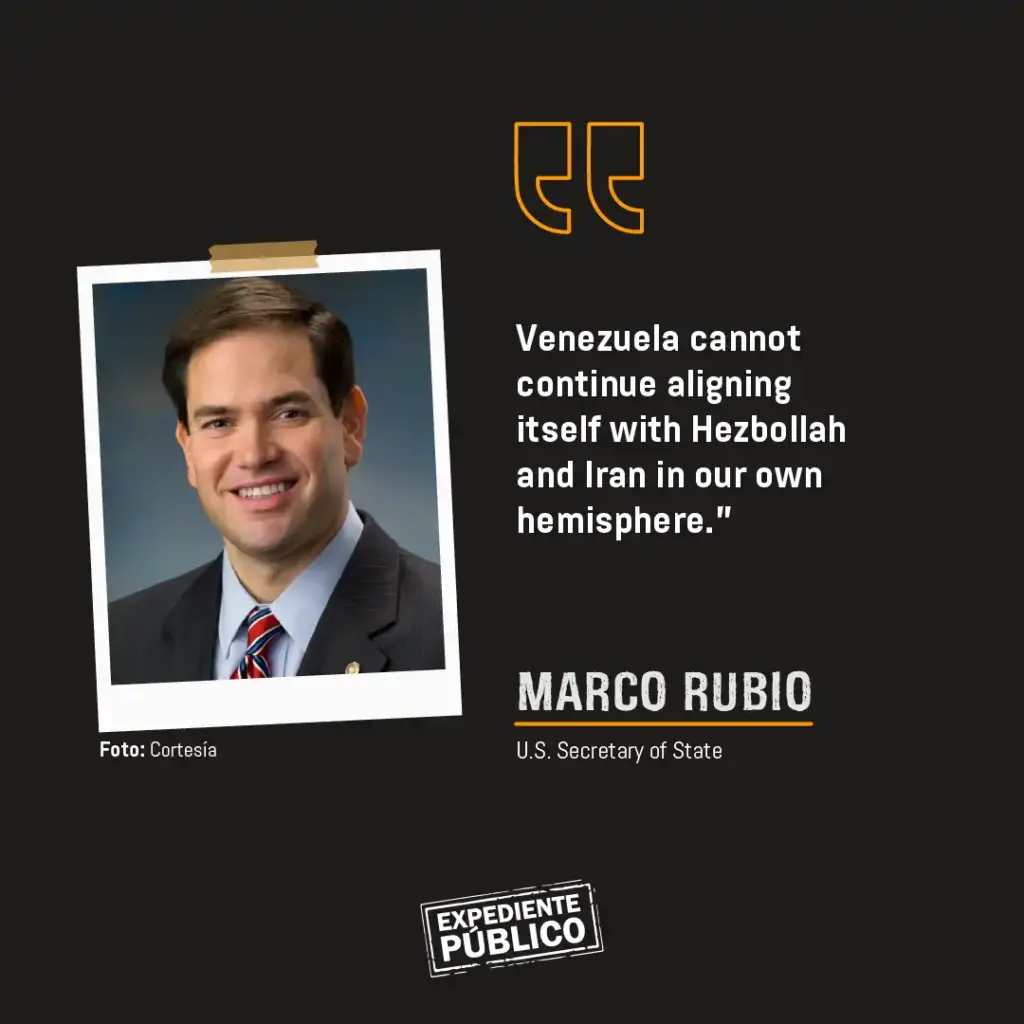
Should such a rupture eventually occur, it would validate the warning issued by U.S. Secretary of State Marco Rubio in a television interview in January:
“Venezuela cannot continue aligning itself with Hezbollah and Iran in our own hemisphere.”
Cardozo noted that Rodríguez still has three important regional partners who would likely oppose a rupture of relations with Iran: Claudia Sheinbaum’s Mexico, Gustavo Petro’s Colombia, and Luiz Inácio Lula da Silva’s Brazil.
“I see a willingness to take advantage of this moment and get rid of certain connections, but we do not know what debts and arrangements may exist. Moreover, among progressive governments, abandoning Iran is not viewed favorably,” she warned.
Romero agrees with this assessment. In her view, ending diplomatic relations with Iran would be among the first decisions to be taken following a presidential election.
Should a rupture eventually materialize, it would give renewed relevance to the warning issued by U.S. Secretary of State Marco Rubio during a television interview in January:
“Venezuela cannot continue aligning itself with Hezbollah and Iran in our own hemisphere.”